
Synthetic vs real user monitoring
One tells you whether a scripted request works. The other tells you what your users are actually experiencing. Neither is sufficient, and they fail in opposite directions.
One tells you whether a scripted request works. The other tells you what your users are actually experiencing. Neither is sufficient, and they fail in opposite directions.
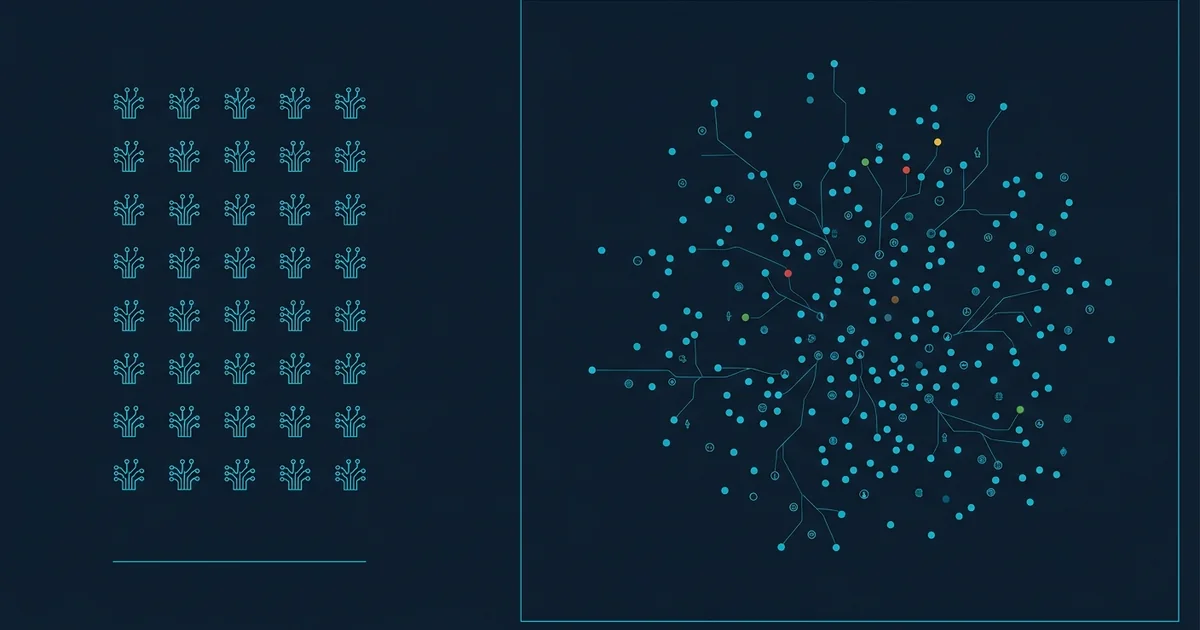
There are two fundamentally different ways to know whether a website is working, and the difference between them explains most disagreements about whether a service is "up".
Synthetic monitoring sends artificial requests on a schedule from controlled locations. Real user monitoring instruments the actual application and reports what actual visitors experienced.
The same request, from the same place, at the same interval. Because everything is held constant, a change in the result means a change in the system - Which makes synthetic data unusually clean for spotting trends and regressions.
It also works when nobody is using the site. A synthetic check running at 4am catches the outage that would otherwise be discovered by the first visitor at 7am. That is the single biggest argument for it.
And it is the only way to monitor a journey that involves making changes you do not want real users making - A checkout with a test card, a sign-up with a throwaway account.
What it misses: Everything it was not scripted to do. A synthetic check tests one path from one place with one configuration. Real users are on hundreds of device and network combinations, in every geography, doing things nobody scripted. A check from a data centre on a fast connection tells you nothing about a user on a congested mobile network.
RUM works by embedding a small script that reports timing and error data from the visitor's own browser. Every visitor becomes a measurement.
The coverage is total. Every page, every device, every network, every geography - Weighted naturally by how much traffic each actually receives, which means you spend your attention where your users are rather than where you guessed they were.
It is also the only way to see the things that only exist in a real browser: A JavaScript error that happens on one browser version, an extension conflict, a slow third-party script, a Core Web Vitals score that only degrades on mid-range Android devices.
What it misses: The outage. This is the fundamental and unfixable limitation - A user who cannot load the page cannot report that they could not load the page. When a site is fully down, RUM data does not spike; it goes silent. A sudden absence of data is a signal, but it is a weak and ambiguous one, because low traffic looks the same.
RUM also cannot tell you about a problem before it affects someone, by definition. And it is noisy: A slow page load might be your server or it might be one user on a train in a tunnel, and you cannot always tell.
| Synthetic | Real user | |
|---|---|---|
| Detects total outage | Yes, quickly | Poorly - Data goes silent |
| Works with no traffic | Yes | No |
| Covers real devices and networks | No | Yes |
| Finds regional problems | Only where you check | Yes, naturally |
| Consistent baseline | Yes | No - Traffic mix shifts |
| Catches client-side errors | Rarely | Yes |
| Can test transactions safely | Yes | No |
| Privacy considerations | None | Real ones |
Because the blind spots are complementary rather than overlapping.
Synthetic answers "is it up and is it getting slower" with a clean, controlled signal that works around the clock. RUM answers "what are people actually experiencing" with total coverage of everything you did not anticipate.
Run synthetic checks for availability and alerting, and RUM for performance work and for understanding the long tail. Use synthetic for the alert that wakes someone; use RUM for the investigation afterwards.
Worth being explicit, since the distinction is exactly what this article is about.
The monitoring on IsItDown.now is synthetic: A probe every 20 minutes from one location against one URL per service. That gives a clean, consistent record and an outage log that cannot be manipulated - And it carries every limitation described above. It cannot see a regional outage, a broken mobile app, or a login failure behind a working home page.
The user report system is a crowd-sourced stand-in for RUM. It cannot measure anything, and it depends entirely on people choosing to tell us - But it notices exactly the failures a synthetic probe cannot, and it notices them immediately.
Neither is sufficient. Shown together, with their respective limitations stated, they cover more than either does alone. That is the whole argument for the design, and the methodology page spells out where each one falls short.
RUM means shipping data about your users' browsing to a third party, and that carries real obligations. Choose a tool that samples rather than collects everything, that does not record session replays by default, and that lets you strip identifiers before they leave the browser.
The performance insight is genuinely valuable. It is not valuable enough to justify collecting more than you need.
Synthetic monitoring sends artificial requests on a schedule from controlled locations. Real user monitoring instruments the application and reports what actual visitors experienced. Synthetic is consistent and narrow; RUM is comprehensive and noisy.
Poorly. A user who cannot load the page cannot run the script that would report the failure, so during a total outage RUM data goes silent rather than spiking. A sudden absence of data is a signal, but a weak one - Low traffic looks the same.
If reliability matters, yes, because their blind spots are complementary. Synthetic catches outages around the clock and gives a clean trend line; RUM catches everything you did not think to script, on devices and networks you do not have.
Synthetic - A probe every 20 minutes from one location against one URL per service. The user report system is a crowd-sourced stand-in for RUM, covering the regional, mobile and feature-level failures a single synthetic probe cannot see.
How to set up uptime monitoring that actually catches problems: What to check, from where, how often, and what to alert on.
Why most real outages are partial, how regional and feature-level failures hide from monitoring, and how to tell what is actually broken.
Why official status pages lag user reports, how they are built, and how to read one properly - Including what a green banner does not mean.
The uptime nines table, what each level costs to achieve, and why how uptime is measured matters more than the number itself.